Reviewing Hello 5th Grade for Real Embroidery Projects
As a designer who spends more time at the hoop than away from it, I approach every new digital embroidery file with a critical eye. It is not enough for a design to look cute on a screen; it must survive the tension of the machine, the texture of the fabric, and the scrutiny of a paying customer. Recently, I evaluated the Hello 5th Grade design, a graphic asset marketed toward educators and crafters. My goal was to determine if this piece holds up as a professional machine embroidery design suitable for commercial use or if it remains strictly a digital cut file for vinyl enthusiasts.
First Impressions and Visual Personality
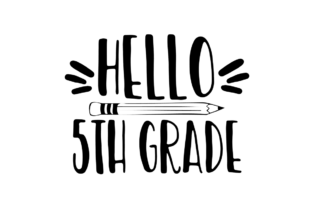
Upon opening the files, the first thing that strikes me about Hello 5th Grade is its clean, approachable aesthetic. The typography suggests a mood of excitement and readiness, perfectly capturing the energy of a new school year. For those of us in the crafts industry, we know that "teacher gear" is a massive market, but it is also saturated. To stand out, a design needs clarity. This graphic offers a bold layout that translates well visually. However, as an embroiderer, my immediate concern is how those crisp digital lines convert into thread.
The design functions primarily as a Graphics asset, available as an SVG and Transparent PNG. This versatility is excellent for hybrid creators who might want to combine heat transfer vinyl with stitching. Yet, for a pure embroidery application, one must consider how to digitize this effectively if a pre-made stitch file is not included, or how to apply it if using it as an appliqué pattern. The shape and theme naturally belong on items that celebrate education, making it a prime candidate for custom apparel and boutique merchandise.
Real-World Application: The Teacher Tote Scenario
To truly test the viability of Hello 5th Grade, I visualized a specific real-life scenario: creating a limited run of canvas tote bags for a local elementary school's welcome week. These bags needed to be durable, washable, and visually appealing to both teachers and parents. In this context, the design shines as a potential tote bag design. The open spacing in the lettering allows for good stitch definition, preventing the text from becoming a solid, unreadable blob when stitched out on textured canvas.
If I were to produce this as a finished product for an Etsy seller or a small shop product line, I would likely lean into an appliqué method. Using the SVG to cut felt or twill fabric and then securing it with a satin or blanket stitch would add dimension and durability. This approach elevates the item from a simple print to a high-value handmade product. Alternatively, for a softer look on a sweatshirt embroidery project, a dense fill stitch could work, provided the lettering is thick enough to support the thread density without puckering.
Navigating Fabric and Hoop Challenges
While the design has potential, there are areas where caution is required. When working with embroidery projects, the substrate dictates the success of the stitch. If you attempt to stitch Hello 5th Grade on a stretchy jersey knit for a baby embroidery item, you must be vigilant. Thin fabrics and stretchy materials can distort fine details. Without a proper stabilizer, the text could warp, ruining the professional look.
Furthermore, consider the hoop size. If the design is intricate, it might require a larger hoop to ensure the frame does not crush the motif. For curved surfaces like caps or hats, the layout might need adjustment. A flat graphic often looks distorted when wrapped around a curved brim. In such cases, simplifying the design or adjusting the pull compensation in your digitizing software is essential. Also, be wary of thread colors on dark fabrics. If the design relies on subtle gradients in its PNG form, those will be lost in thread unless you carefully select high-contrast thread colors that pop against navy or black garments.
Commercial Value and Brand Consistency
For creative entrepreneurs and commercial embroidery professionals, the value of a design lies in its ability to build trust. A sloppy stitch job on a teacher's shirt can damage a brand's reputation. Hello 5th Grade, when executed correctly, offers a polished look that enhances brand consistency. It signals that the maker cares about quality. Whether used for holiday embroidery gifts at the end of the school year or as part of a back-to-school collection, the design's clarity supports a premium price point.
However, buyers engage with what they can see clearly. If the stitch density is too high, the fabric becomes stiff and uncomfortable, which is a common complaint in personalized gift reviews. Conversely, if the density is too low, the backing shows through. Balancing these factors is key to maintaining customer trust. For printable mockup creation, the transparent PNG is invaluable, allowing sellers to showcase the design on various products before committing to production.
Practical Notes for the Studio
Before running a production batch of Hello 5th Grade items, I recommend a strict testing protocol. First, always test the design on scrap fabric that matches your final material. This reveals issues with tension and registration that a screen cannot show. Second, check thread color contrast rigorously; what looks good on a monitor may vanish on heather grey fleece.
You should also review stitch density settings if you are digitizing the SVG yourself. Ensure that small details do not become fragile threads that snag during washing. Confirm hoop size compatibility with your machine's capabilities. When inspecting small details, look for potential jump stitches that might need trimming. It is also wise to test it in black and white mockups to ensure the design relies on shape rather than just color for recognition.
Finally, a crucial reminder for any craft business: confirm licensing before selling finished items or digital products. Since the product description specifies SVG and PNG formats, verify if the license permits physical resale or if it is restricted to personal use. Never assume a design asset includes commercial rights unless explicitly stated. By taking these precautions, you ensure that Hello 5th Grade becomes a profitable and reliable part of your embroidery project portfolio, delivering joy to teachers and quality to your customers.